Facebook

Pass INBDE on First Attempt

blog banner

The Cost of Rushing: Why Your First INBDE Attempt Is Your Most Important Career Decision

dr samantha

Written By:

Dr. Samantha Lynch
DDS

sb blog 1

We see it every single cycle. A brilliant, qualified doctor — someone who ran a clinic in India, managed complex cases in the Middle East, or built a thriving practice in Latin America — sits in front of a Prometric screen and freezes.

Not because they aren’t smart enough. Not because dentistry is new to them.

They freeze because they rushed. They booked a date to meet a CAAPID deadline, not because their data said they were ready. And in that one decision — made under calendar pressure, not clinical judgment — they set their career back by far more than the months they were trying to save.

Doctor, if you are feeling the squeeze of the application cycle right now, this article is for you. We are going to walk through the real, invisible cost of an unprepared first INBDE attempt, why the exam is fundamentally different from what you studied back home, and — most importantly — give you a concrete self-assessment
framework so you can stop guessing and know, with data, when you are genuinely ready
to walk in and pass.

This is not a pep talk. This is a strategy.

sb blog 2

Table of Content:

The Application Cycle Trap — The Panic Is Real, But the Math Is Wrong

Let’s be honest about what is happening inside your head right now.

You are watching the CAAPID cycle. You know the application window. You have been doing the math: “If I pass by March, I can apply this cycle. If I miss March, I lose a full year.”

sb blog 3 1

That fear is completely legitimate. A year in this process feels like an eternity when you are driving rideshare between study sessions, working as a dental assistant just to keep the lights on, and watching classmates from back home move forward in their careers. We know this path is hard. We are not going to pretend otherwise.

But here is the core truth that we need to put on the table right now, clearly and without softening it:

Rushing to take the INBDE before you are genuinely ready — just to hit a calendar deadline — is the fastest way to delay your dental career by years, not months.

That feels counterintuitive. But once you understand the mechanics of what a first-attempt fail actually does to your application, your timeline, and your psychology, the math changes completely.

Let’s break it down.

The Invisible Costs of an INBDE Fail That Nobody Talks About

Most international dentists assume the INBDE is a pass/fail reset button. The logic goes: “It’s pass or fail, so if I fail, I just retake it and nobody will know the difference.”

This is one of the most dangerous misconceptions in dental licensing, and it is costing doctors real opportunities. Here is what a first-attempt fail actually costs you.

2.1: Your Attempt History Is Permanently Visible to Admissions Committees

The INBDE result that gets reported to dental schools and programs is not just a pass or fail. Admissions committees — the people deciding whether you get an interview, a seat, a match — can see how many attempts it took you to pass.

Advanced Standing Programs (ASPs) and GPR/AEGD programs receive thousands of applications from highly qualified international dentists every single cycle. With that volume, programs use filters. A first-attempt pass is one of the cleanest, most powerful filters they have.

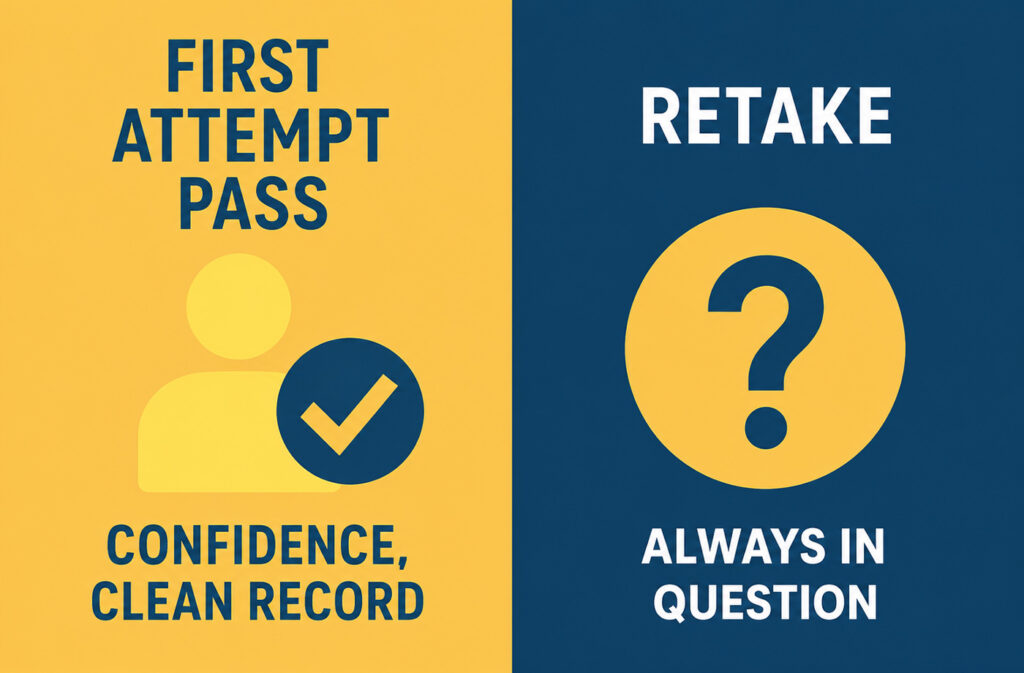
It tells a program director something that your CV cannot: that you perform under pressure, that your preparation was methodical, and that you are ready to function at the standard of a U.S.-trained clinician from day one. A retake, even a successful one, raises a question mark. It doesn’t disqualify you — but in a field where the margins are this thin, you do not want a question mark next to your name.

sb blog 4 1

2.2: The 60-Day Lockout Destroys Your Timeline

sb blog 5 1

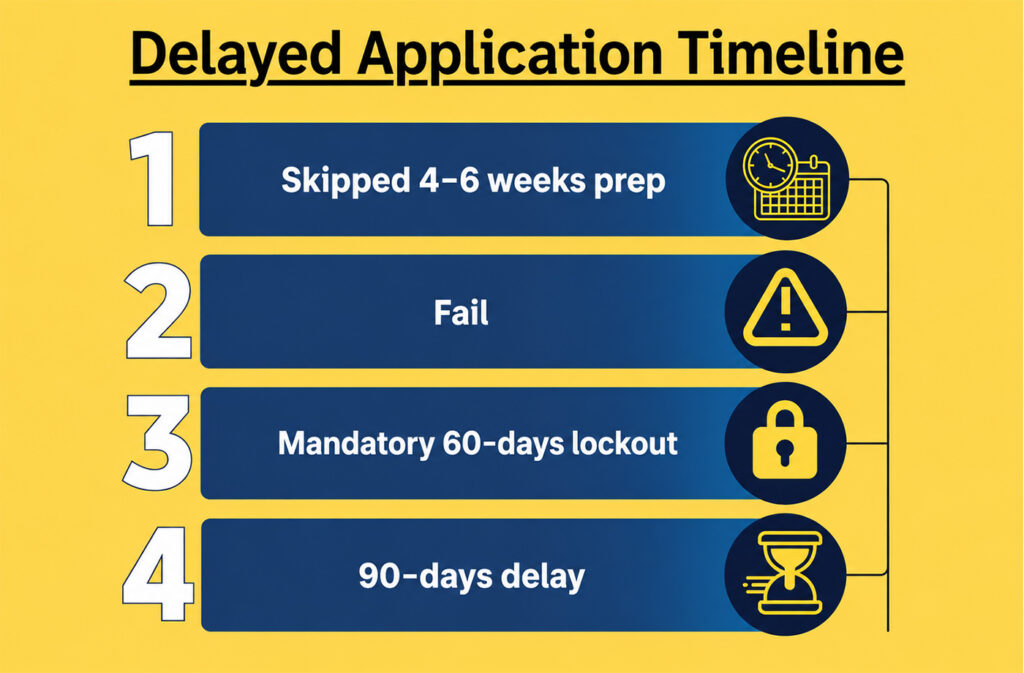
A failed attempt does not mean you reschedule for the following week. The JCNDE mandates a mandatory 60-day waiting period before you can retake the exam.

Think about what that does to your application cycle math. The very deadline you were rushing toward — the one that caused you to book an underprepared test date — is now guaranteed to be missed. You have not saved time. You have lost at minimum two months, plus the weeks it takes to get a new Prometric slot.

The irony is brutal: the extra four to six weeks of preparation you skipped in your rush is now a guaranteed 90-day delay.

2.3: The Psychological Cost Is Real and It Is Underestimated

We need to talk about something that almost nobody in this space acknowledges openly.

The INBDE is a 500-question, two-day examination. It is physically and mentally exhausting. It tests not just your knowledge but your endurance, your composure under cognitive load, and your ability to synthesize clinical information across multiple domains simultaneously.

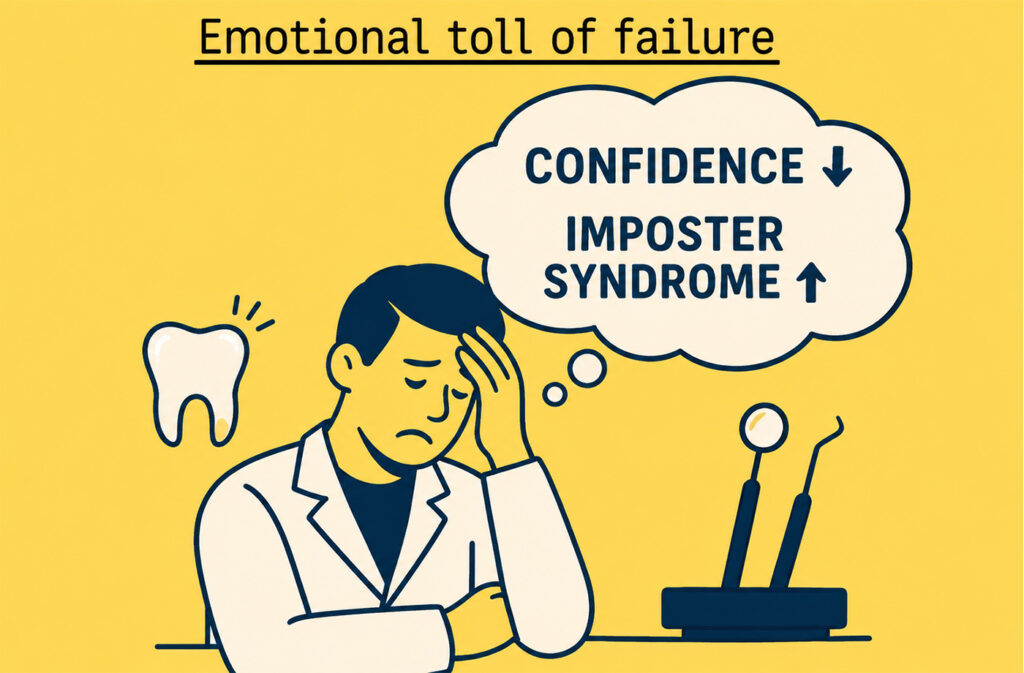
Failing that exam does not just affect your transcript. It hits your confidence in a way that is genuinely difficult to recover from. Imposter Syndrome — which most international dentists are already managing every single day — gets dramatically worse after a fail. Rebuilding the stamina, the focus, and the belief that you belong in that exam room takes far more energy than simply waiting one extra month to be properly prepared.

sb blog 7 1

At Simpli Boards, our mentors have sat with doctors on both sides of this experience. The ones who took an extra cycle to prepare and passed on their first attempt arrived at their interviews grounded and confident. The ones who rushed, failed, and had to rebuild — they passed too, eventually — but the psychological tax was significant. We factor this into every study plan we build with our students because your mental bandwidth is a resource, and how you spend it matters.

Why Cramming and Recalls Are Failing Smart Doctors in 2026–2027

Here is the second piece of the puzzle, and it explains why so many intelligent, experienced dentists are failing the INBDE on their first attempt even when they feel prepared.

The exam has fundamentally changed. And many of the study strategies circulating in WhatsApp groups and Telegram channels were built for a different test.

3.1: The INBDE Is Not the Old NBDE — It Tests Clinical Integration, Not Memorization

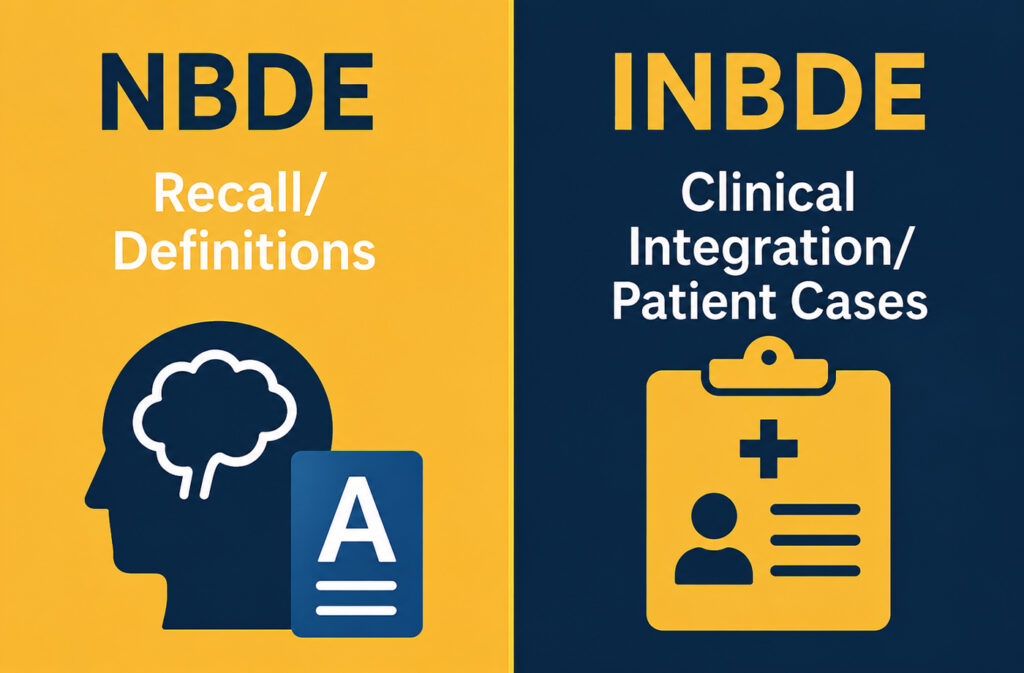
The predecessor exam — the two-part NBDE — was heavily fact-based. You could pass it with strong memorization: anatomy definitions, pathology classifications, pharmacology mechanisms. It rewarded recall.

sb blog 6 1

The INBDE was specifically designed to replace that model. The exam tests clinical integration. This means it forces you to think like a practicing U.S. or Canadian clinician from the first question to the last.

You are not being asked to define a term. You are being given a patient — a real, complex, messy human being with multiple systemic conditions, a social history, medications that interact, and an oral presentation that does not fit neatly into a textbook category — and you are being asked to make decisions.

What is the most appropriate immediate treatment? How does this patient’s uncontrolled Type 2 Diabetes affect your choice of local anesthetic? Given the radiographic findings and the patient’s anticoagulation therapy, which surgical approach do you take?

This requires a completely different kind of preparation. Memorization is the floor, not the ceiling.

3.2: The 2026–2027 Performance Standard Has Been Raised

This is not anecdotal. The JCNDE has explicitly elevated the performance standard for the INBDE. The exam relies more heavily than ever on complex patient-case scenarios — multi-item case sets built around a single patient file that includes medical history, clinical notes, radiographs, and lab results.

Old “recall” question banks, shared answer sheets, and recycled question pools are not just insufficient for this exam. They are actively misleading. Studying from them trains your brain to look for pattern matching and keyword recognition — exactly the skills that will fail you when a case-set question requires genuine clinical reasoning.

The doctors who are passing the INBDE in 2026–2027 are the ones who trained themselves to think through a case, not just pattern-match an answer.

This is exactly why the Simpli-Notes curriculum at Simpli Boards is built around clinical reasoning frameworks rather than isolated fact sheets. Our high-yield content is organized around how a U.S./Canadian clinician thinks through a patient, not around what definition appears on which page of which textbook. It is a different preparation model for a different exam.

The "Am I Ready?" Self-Assessment Checklist — Stop Guessing, Start Knowing

Doctor, you should not book your Prometric date based on a feeling, a deadline, or what someone in your study group told you. You should book it based on data.

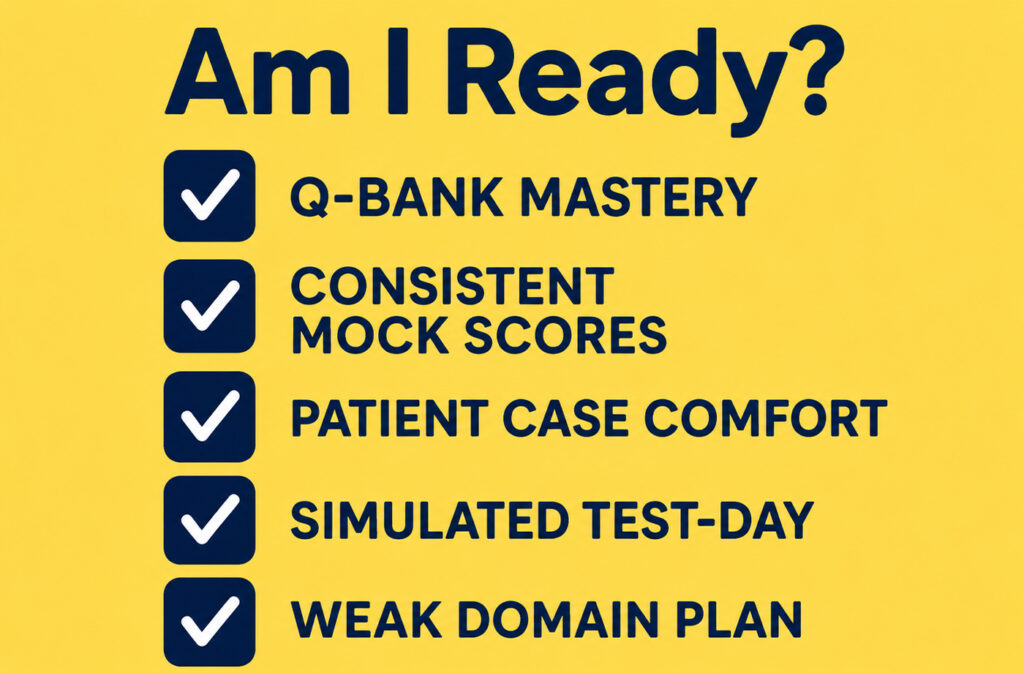
Here is the readiness checklist we use with every Simpli Boards student before we clear them to schedule their exam. You should be able to check every single box before you commit to a test date.

sb blog 9 1
✅ Box 1: Q-Bank Depth, Not Just Q-Bank Completion

There is a critical difference between finishing a question bank and mastering one.

Completion means you clicked through all the questions. Mastery means that when you get a question wrong — or when you get it right but for the wrong reason — you can articulate clearly why each incorrect option is wrong, not just why the correct one is right.

This distinction is everything on the INBDE. The exam is written to test whether you understand the clinical reasoning, not just whether you can identify the right answer on the first pass. If you are working through your Simpli Boards Q-Bank questions but moving on without deeply reviewing your incorrect options, you are building false confidence, not real readiness.

The benchmark: You have completed your primary question bank at least once, your overall accuracy is consistently above the target passing threshold, and you can explain the reasoning on your missed questions without looking at the rationale.

✅ Box 2: Mock Exam Scores Are Consistently — Not Occasionally — Above the Passing Threshold

One good mock score does not clear you to test. Everyone has a good day.

What you need is consistent performance across multiple full-length, timed mock examinations. Specifically:

  • You are not scraping by at the passing line. You have a comfortable margin above it on repeated attempts.
  • You are completing both days of the mock under timed conditions — no pausing, no open notes, no distractions.
  • Your scores are stable or improving, not erratic.

If your scores are swinging wildly between well above passing and below it depending on the day, that is a signal that your conceptual foundation has gaps. A high-yield study review of your weak domains — not just more question practice — is what closes that gap.

Our mentors at Simpli Boards use a data-driven score tracking system during weekend sessions to identify exactly which content domains are pulling a student’s score down, and we build targeted remediation plans around that data. We don’t guess. We track.

✅ Box 3: You Are Comfortable With Patient Case Sets

This is the one that separates the truly prepared candidates from those who are ready on paper but not in the room.

Open a full patient box — complete medical history, chief complaint, clinical findings, radiographs, and lab values. Now answer these questions before you look at a single question stem:

  • What is this patient’s primary systemic risk factor, and how does it modify my clinical approach?
  • If this patient is on anticoagulants, metformin, or a bisphosphonate, what changes in my treatment plan?
  • What does the radiographic presentation tell me about the timeline of this condition?

If you can move through that synthesis quickly and confidently, you are ready for case-set questions. If you find yourself reading the history and feeling uncertain about where to start, you need more case-based practice — not more single-question drilling.

The INBDE will give you a patient. Your job is to manage that patient, not answer a trivia question.

✅ Box 4: You Have Simulated Test-Day Conditions at Least Twice

This one sounds basic, but it is routinely skipped and it matters enormously.

Have you sat down, opened a full-length timed mock, and completed it under actual test-day conditions — same start time as your scheduled exam, same break structure, no phone, no study materials, no pausing?

Cognitive endurance is a skill that gets trained, not inherited. If the first time you experience 500 questions over two days is at Prometric, you are at a significant disadvantage.

✅ Box 5: You Have a Subject Matter Plan for Your Weakest Domains

Readiness is not the absence of weak spots. It is having a clear, executed plan for each one.

Pull your mock exam breakdown by subject area. Identify the two or three domains where you are consistently underperforming. Then ask yourself honestly: have you done targeted, high-yield review in those areas, or have you been hoping the overall question volume will carry you through?

If you have specific weak spots that remain unaddressed, you are not ready yet. Address them with focus, track whether your scores move, and then reassess.


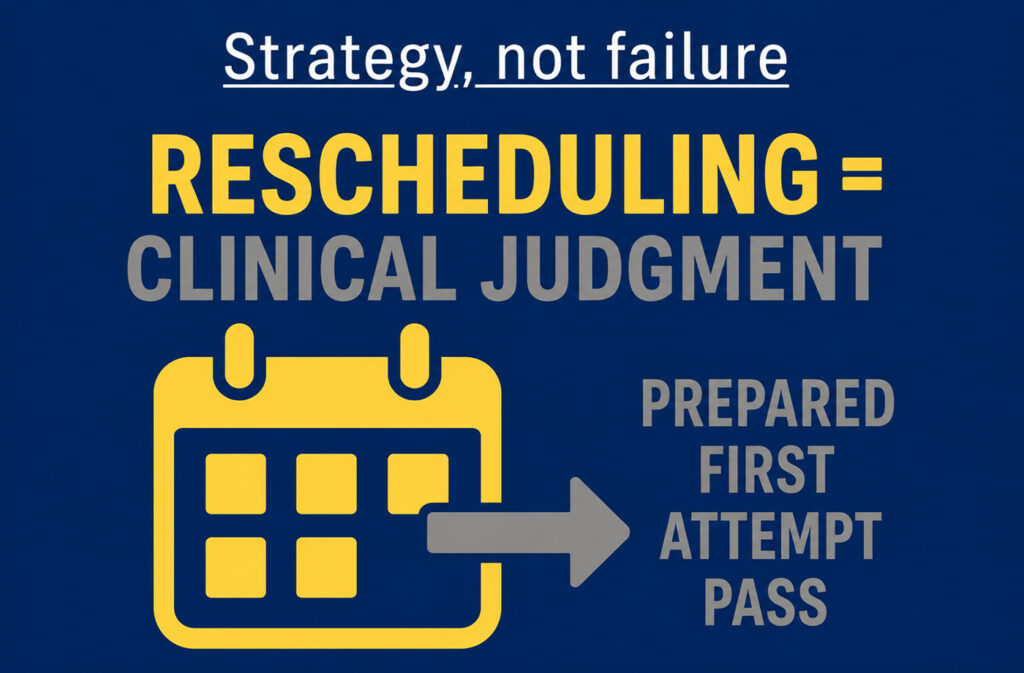
Rescheduling Is Not Failure — It Is Clinical Judgment

sb blog 10 1

We want to close this section with a reframe that we genuinely believe in, and that we tell every single Simpli Boards student who is wrestling with this decision.

Choosing to postpone your INBDE test date because you need four more weeks of preparation is not a failure of will. It is not a weakness. It is not falling behind.

It is clinical judgment.

Think about how you were trained as a dentist. Before you began any irreversible procedure, you assessed the situation. You did not cut when you were unsure. You evaluated, you planned, you confirmed your diagnosis — and then you acted.

This is the same decision. Your Prometric date is not irreversible — your attempt record is. The surgeon who says “I’m not confident in these conditions — let’s reschedule this case” is not a failure. They are the professional you want operating on you.

Admissions committees do not just want high scores. They want dentists who demonstrate sound professional judgment. A first-attempt pass, achieved on a date you chose deliberately because your data told you that you were ready, tells that story perfectly.

Delay is not defeat. It is a strategy.

Frequently Asked Questions About the INBDE

How many times can you take the INBDE?

The JCNDE allows candidates to take the INBDE up to six times total. However, a mandatory 60-day waiting period applies after each failed attempt. While retakes are permitted, a first-attempt pass remains the strongest signal to Advanced Standing Programs and residency directors.

How hard is the INBDE for foreign-trained dentists?

The INBDE is challenging for international dentists specifically because of the clinical integration model. Your foundational science knowledge is strong — you earned a dental degree. The learning curve is in applying that knowledge to U.S./Canadian clinical scenarios, patient management standards, and evidence-based protocols that may differ from your training country. The right preparation strategy bridges that gap directly.

How long should I study for the INBDE?

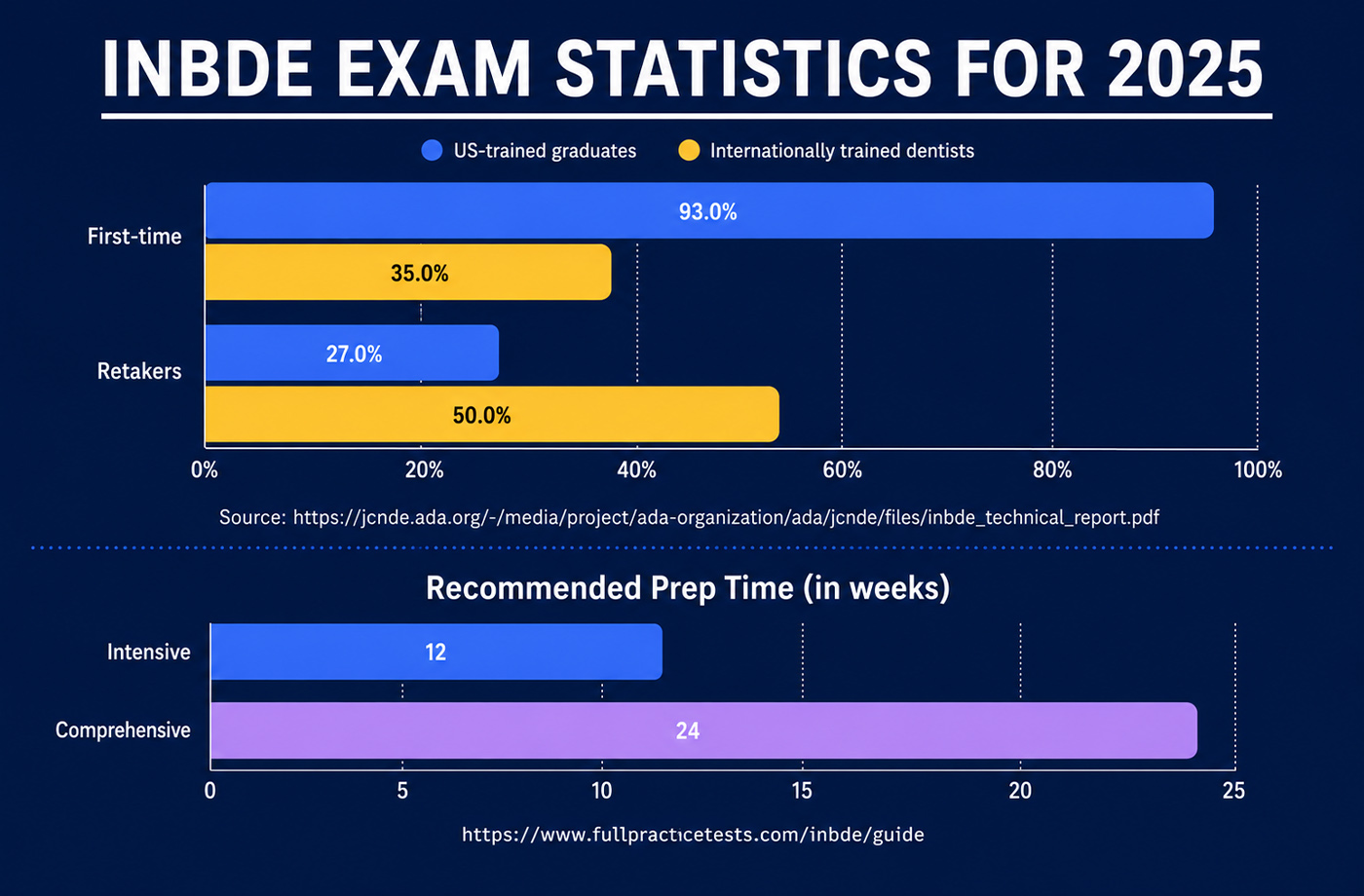
Most international dentists who pass on their first attempt spend between four and eight months in structured, focused preparation — not just passive reading, but active question practice, mock exams, and clinical integration review. The exact timeline depends on your starting baseline, how many hours per week you can realistically dedicate, and how quickly your mock scores progress toward your target.

Is it possible to pass the INBDE while working full time?

Yes — but it requires a high-yield, efficient study strategy. Working through isolated textbooks or unfocused content is not a viable approach when your study time is limited. Every hour you invest needs a strong ROI on your time. Focused question bank work, targeted content review, and regular mock testing is the framework that works for working professionals. Many Simpli Boards students are actively working while preparing — we design our curriculum specifically around this reality.

Do dental schools actually care about INBDE attempt history?

Yes. While policies vary by program, most Advanced Standing Program directors are reviewing your attempt history as part of the application evaluation. In a competitive cycle with hundreds of qualified international applicants, a clean first-attempt pass is a meaningful differentiator. Schools use it to make preliminary cuts before they even read your personal statement.

What is the difference between the INBDE and the NDEB for Canadian licensing?

The INBDE is the U.S. national dental board examination administered by the JCNDE. The NDEB (National Dental Examining Board of Canada) governs the Canadian pathway, which includes a separate Assessment of Fundamental Knowledge (AFK) and the Objective Structured Clinical Examination (OSCE). The clinical reasoning orientation of both exams is similar — both have moved toward patient-case integration — but the content weighting, format, and regulatory pathways differ meaningfully. At Simpli Boards, we prepare students for both pathways.

What are the most important subjects to focus on for the INBDE?

Rather than ranking subjects in isolation, the INBDE rewards candidates who can integrate across subjects. That said, case-set heavy topics include: oral medicine and pathology, pharmacology (especially drug interactions and medically compromised patients), periodontics, oral surgery, and pediatric dentistry. Your best ROI is in subjects where your mock scores are lowest, not in reviewing content you already know well.

Your Next Step — Reclaim Your Title the Right Way

Doctor, you have worked too hard and sacrificed too much to gamble your first INBDE attempt on a calendar date that was picked out of anxiety rather than readiness.

The path to an Advanced Standing Program seat, to a U.S. or Canadian dental license, to the career you moved here to build — it runs through a single, clean, first-attempt pass on that board exam. That is the foundation everything else is built on.

The strategy is not to move faster. The strategy is to move right.

At Simpli Boards, we do not just help you memorize dental concepts. We train you to think like a U.S. and Canadian clinician — the exact cognitive shift the INBDE is testing for — so that when you walk into that Prometric center, you are not hoping for the best. You are executing a plan.

sb blog 11

Our Simpli-Notes distill the highest-yield clinical frameworks. Our weekend mentor sessions are led by doctors who have been through this exact process. Our mock exam analytics give you a data-driven picture of exactly where you stand and exactly what to fix before you book your date. And our study roadmaps are built around your real life — your work schedule, your timeline, your baseline.

If your mock scores are stalling, if the application cycle is creating pressure, or if you are simply unsure whether you are ready — let’s map it out together. No guessing. No toxic optimism. Just a clear, realistic, smart strategy built on data.

🎯 Start Your $1 Trial Today

Get immediate access to Simpli Boards’ high-yield content, mock exam analytics, and mentor community — the complete system built for international dentists who are serious about their first-attempt pass.

You earned the title of Doctor. It belongs to you. Let’s make sure everyone in North America knows it.

Simpli Boards is a premium dental board preparation platform built exclusively for internationally trained dentists pursuing licensure in the United States (INBDE) and Canada (NDEB). Our curriculum is designed by and for foreign-trained dental professionals who are serious about passing on the first attempt.

INBDE And AFK Courses offered by Simpli Boards

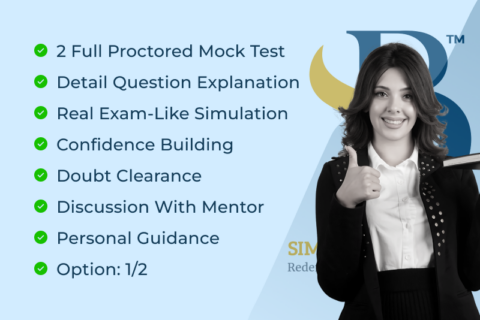
  • Select options This product has multiple variants. The options may be chosen on the product page Sale AFK Mock Test

    AFK Mock Test

    Number of Mock Tests to choose- 1/2/3 Channel: 100% Online Mock Test …
    Price range: CA$400.00 through CA$1,000.00
    Select options This product has multiple variants. The options may be chosen on the product page
  • AFK Advance Plus Premium

    Channel: 100% Online Batch Starts In: September | April Includes– 480 hours …
    Original price was: CA$2,500.00.Current price is: CA$2,000.00.
    Add to cart
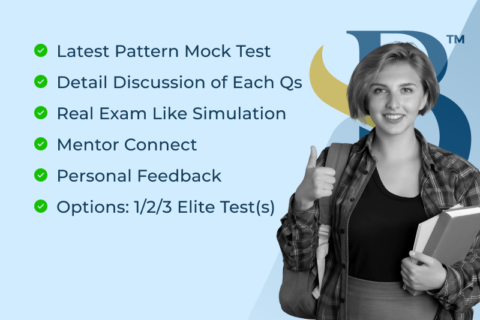
  • Select options This product has multiple variants. The options may be chosen on the product page Sale INBDE Mock Test

    INBDE Mock Test

    500 Questions based on current exam pattern Detailed discussion of 500 …
    Price range: CA$225.00 through CA$450.00
    Select options This product has multiple variants. The options may be chosen on the product page
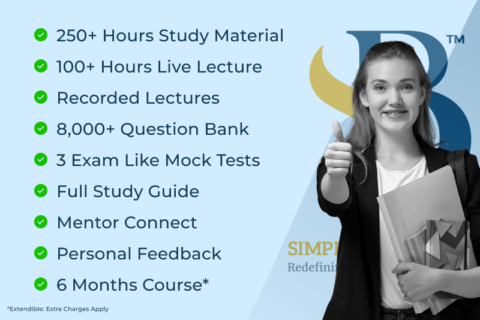
  • INBDE Advance Plus Premium

    Simpli Notes: 250+ Hours Study Material Lecture Videos Simpli Lecture: 100+ Hours …
    Original price was: CA$2,250.00.Current price is: CA$1,345.00.
    Add to cart
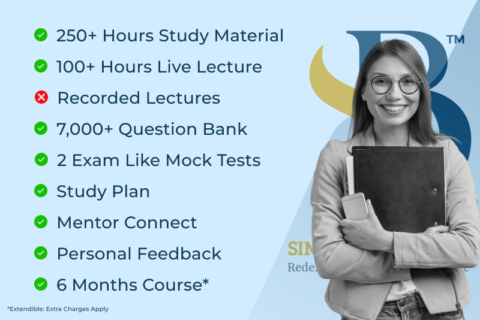
  • INBDE Advance Plus

    Simpli Notes: 250+ Hours Study Material Simpli Lecture: 100+ Hours Live …
    Original price was: CA$1,650.00.Current price is: CA$970.00.
    Add to cart
  • INBDE Advance

    Simpli Notes: 250+ Hours Study Material Simpli Tests: 6,000+ Question Bank Elite …
    Original price was: CA$900.00.Current price is: CA$520.00.
    Add to cart

Leave a comment