CAAPID 2026 Timeline With a Smart 8 Week Checklist

Written By:
Dr. Sujit Pradhan
Co-Founder & Mentor, Simpli Boards

Table of Content:
Introduction: The High-Stakes Race for 2026
If you are a dental graduate or student eyeing a seat in a US dental school for the Class of 2026 (or typically the Class of 2028 upon graduation), you are entering one of the most competitive academic arenas in the world.
The narrative is often simple: Get good grades, pass the boards, apply.
But the reality is far more complex. The ADEA CAAPID (Centralized Application for Advanced Placement for International Dentists) cycle is not just an application process; it is a strategic maneuver. With thousands of qualified applicants fighting for a few hundred seats across the US, the difference between an acceptance letter and silence often comes down to preparation speed and narrative clarity.
This is January. The portal opens in early March.
Most applicants will wait until March to open their laptops and start typing. These applicants are already behind.
This guide is your master plan. We are going to move beyond simple checklists and explore the psychology of admissions, the tactics of document preparation, and the strategy of the “60-Day Sprint.” This is how you transform from a “potential applicant” into a “top-tier candidate.”
Chapter 1: The "Why" Behind the 60-Day Sprint
Understanding Rolling Admissions
To understand why January and February are the most critical months of your year, you must understand how Dental Admissions Committees (AdComs) operate.
Most Advanced Standing programs utilize Rolling Admissions. This means they review applications as they arrive, interview candidates in batches, and offer seats continuously throughout the cycle.
- Scenario A: You submit a perfect application in June. By then, the school may have already filled 50% of its interview slots. The criteria for the remaining slots become stricter.
- Scenario B: You submit a perfect application in March (Week 1). You are competing against an empty board. Your application is reviewed with fresh eyes, and you are first in line for interview invites.
The “Front-Loading” Strategy
The “60-Day Sprint” strategy is based on the concept of front-loading. The goal is to have 95% of your application packet sitting on your hard drive before you even receive your CAAPID login credentials.
When the portal opens, your job should be data entry, not creation. While your competitors are frantically emailing their Deans for letters in March, you should be hitting “Submit.”
Chapter 2: The Foundations (January 10 – January 31)
This phase is about logistics. These are the “Non-Negotiables”—the items that rely on third parties and bureaucracy. If these aren’t done, no amount of brilliant essay writing can save you.
1. The Credential Evaluation (ECE/WES)
The Trap: Many students assume that because they have their transcripts, they are ready. They forget that US schools do not read foreign transcripts directly; they read ECE (Educational Credential Evaluators) or WES (World Education Services) reports.
The Reality: During peak season (February–April), ECE processing times can double. If your university back home is slow to send official sealed documents, a 2-week process can turn into a 2-month nightmare.
Strategic Action:
- Order a Course-by-Course Evaluation: This is the standard for dental schools. It breaks down your GPA into US equivalents.
- Request Multiple Copies: When ordering from your home university, ask if they can send the documents via courier (DHL/FedEx) rather than standard mail to speed up the process.
- Check the GPA Translation: If your ECE report comes back with a GPA lower than expected, you need to know this now so you can address it in your application (e.g., in the “limitation” section of the CAAPID application).
2. The Score Audit: INBDE & TOEFL
As a dental student, you know clinical skills are paramount. But to an AdCom scanning 1,000 applications, numbers are the first filter.
The INBDE (Integrated National Board Dental Examination)
- Status Check: You must have your “Pass” report downloaded.
- The Myth: “I just need to pass.”
- The Truth: While it is a Pass/Fail exam, when you passed matters. If you passed recently, it shows your knowledge is fresh. If you passed 3 years ago and have been clinically inactive, that is a red flag.
The TOEFL: The Silent Killer
This is where arguably 30% of otherwise qualified candidates fail.
-
- The “Safety” Benchmark: Total Score 100+ | Speaking Score 26+.
- Why 26 in Speaking? Dental schools are not just looking for English fluency; they are looking for clinical communication skills. Can you explain a complex root canal procedure to a frightened patient clearly and empathetically? A score of 23 or 24 suggests you might struggle in a high-pressure clinic.
- The “Filter” Risk: Many schools use automated software to sort applications. If the filter is set to Speaking > 25, and you have a 24, your application may never be seen by a human.
Simpli Boards Insight: If you are sitting at a 92 Total or a 23 Speaking, do not “hope for the best.” Retake the exam. A high TOEFL score is the easiest way to improve your competitiveness quickly. Our TOEFL Program for Dental Students is designed specifically to help you bridge the gap from 23 to 26+.
3. Securing Letters of Recommendation (LORs)
This is the most delicate part of Phase 1 because it involves human relationships.
Who to Ask:
- The Dean: Mandatory for almost all schools.
- Clinical Faculty: Someone who has observed your hand skills.
- US Dentist (Shadowing): Highly recommended to prove you understand the US healthcare system.
The “Ask” Protocol: Do not send a vague email saying, “Can you write me a letter?” Instead, send a “LOR Kit” to your recommender:
- Cover Letter: Reminding them of who you are and your specific achievements in their class/clinic.
- Updated CV: So they can reference your extracurriculars.
- Draft Points: Bullet points of qualities you would like them to highlight (e.g., “my leadership during the dental camp,” “my precision in prosthodontics”).
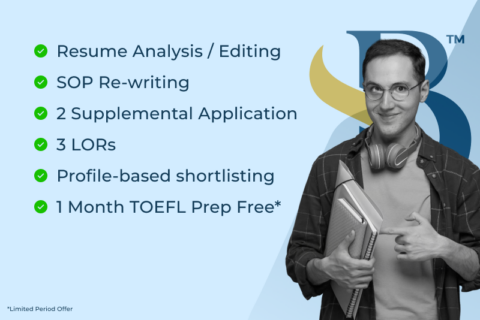
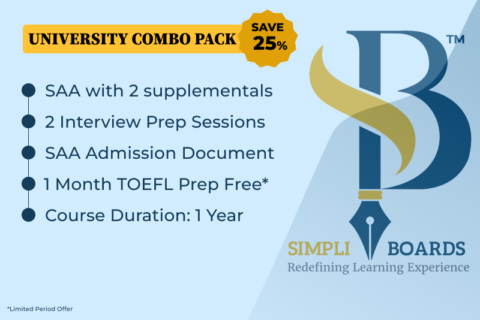
Our Simpli Admission Program includes reviewing your SOPs, LORs, editing resume, helping you choose schools in accordance with your profile. Simpli Boards will fully prepare you for the CAAPID Cycle
Chapter 3: The Narrative & Branding (February 1 – February 21)
Once the bureaucracy is handling your transcripts, you must pivot to the creative side. This is where you answer the question: Who are you?
1. The Statement of Purpose (SOP): Your Hero’s Journey
Your SOP is the heart of your application. It is the only place where you have total control over the narrative.
The Common Mistake: Most SOPs read like a prose version of a CV: “I graduated in 2020. I did an internship. I like dentistry because I want to help people.” Why this fails: It is boring and generic. Every applicant wants to help people.
The Advanced Strategy: Thematic Storytelling Choose a “Brand Theme” for your application:
- The Innovator: Focus on your interest in dental tech, digital dentistry, or research.
- The Community Leader: Focus on public health camps, rural service, and access to care.
- The Resilient Clinician: Focus on overcoming a specific hardship or difficult case.
Structure of a Winning SOP:
- The Hook: Start with a specific moment (e.g., a patient interaction) that defined your career.
- The Journey: Briefly mention your background, but focus on growth.
- The US Pivot: Why the US? Why now? (Avoid generic answers like “better technology.” Be specific).
- The Vision: What will you contribute to the school?
Need Help? Writing about oneself is difficult. Simpli Boards Admissions Consulting specializes in extracting these stories. We help you move from a generic draft to a compelling narrative that AdComs remember.
2. CV Optimization: From “Resume” to “Curriculum Vitae”
In the US, a “Resume” is for a job; a “CV” is for academia.
- Length: A CV can be 2-3 pages (unlike the 1-page resume rule).
- Structure:
- Education: Reverse chronological.
- Clinical Experience: Detail your procedures. Don’t just say “General Dentist.” Say “Performed 500+ extractions, 200+ RCTs.”
- US Shadowing: This is crucial. It proves you aren’t going in blind.
- Research & Publications: Even if you weren’t the lead author, list it.
- Community Service: Shows character.
- Continuing Education (CE): Lists the webinars, workshops, and conferences you attended. This shows a commitment to lifelong learning.
Chapter 4: The Final Polish (February 22 – March 7)
We are now in the “Red Zone.” The portal is about to open.
1. The Professional Headshot
This seems minor, but it is psychology.
- Bad: A cropped selfie, a photo with a busy background, or a photo where you look like a student.
- Good: A studio shot, plain background (grey/white), wearing a suit or professional attire (no scrubs), looking like a colleague.
- Why it matters: When the committee discusses your file, your photo is projected on the screen. You want to look like a doctor they would hire, not a student they need to babysit.
2. The Supplemental Strategy
Here is a fact that catches many students off guard: CAAPID is not the only application. Many top-tier schools (UPenn, UCSF, Boston University, USC) require a “Supplemental Application.”
- The Fee: These often cost $50-$100 extra per school.
- The Questions: They often ask specific essay questions not found in CAAPID (e.g., “Why OUR school specifically?”).
- The Portal: Some are on the university website; some are emailed to you after you submit CAAPID.
Action Item: Create a “Supplemental Tracker” spreadsheet. Identify which of your target schools require extra steps and bookmark those pages now. Do not let a missed supplemental fee be the reason your application is thrown out.
Chapter 5: Advanced Tactics for the Top 1%
If you want to go beyond the basics, here are three advanced strategies used by the most successful applicants.
Tactic A: The “Program Fit” Customization
While CAAPID is a centralized application, you can customize your approach for specific schools via the supplemental essays.
- Research: Look up the current research projects of the faculty at your target school.
- Apply: Mention this in your supplemental essay. “I am particularly interested in Dr. Smith’s work on biomaterials…”
- Result: This shows you have done your homework and aren’t just “spraying and praying.”
Tactic B: LinkedIn Networking
- Action: Optimize your LinkedIn profile.
- Connect: Follow the dental schools you are applying to. Connect with current residents (respectfully).
- Engage: Comment on their posts. When you go for an interview, having a familiar name or face (even digitally) can subtly help.
Tactic C: The “Gap Year” Explanation
If you have a gap in your CV (e.g., waiting for a visa, studying for boards), you must explain it proactively.
- Don’t hide it.
- Reframe it: “During this period, I focused on theoretical mastery via the INBDE and observed US clinical workflows through 100 hours of shadowing.” Turn a gap into a prep phase.
Chapter 6: Troubleshooting & Common Pitfalls
Even with the best plan, things go wrong. Here is how to handle them.
“My Recommender Ghosted Me!”
- Prevention: Always have a backup recommender (a 4th person) in mind.
- Solution: If it is Feb 20th and your Dean hasn’t replied, visit the office in person or call. If that fails, activate your backup immediately.
“My TOEFL Score is 99.”
- The Hard Truth: Retake it.
- The Nuance: If the rest of your profile is stellar (4.0 GPA, published research), you might get a pass. But do you want to gamble your career on “might”?
- Simpli Boards Solution: Use our personalized modules to grab those extra 2-3 points.
“I Have No Research Experience.”
- Don’t Panic. Not all schools require research. Clinical schools prioritize hand skills and experience.
- Pivot: Highlight your “Clinical Case Studies” or “Community Health” experience instead.
FAQ: Questions You Are Too Afraid to Ask
Technically, yes, for some schools. However, your application will likely be placed in a “Pending” pile. It is highly recommended to have the Pass report in hand to ensure your application is reviewed immediately.
Yes. Statistics show that for schools with rolling admissions, interview invites are heavy in the first 3 months. Applying in August drastically reduces your odds compared to March/April.
You usually need the Dean’s letter for administrative reasons (mandatory). For the second letter, always choose the person who knows you best and can write a strong, personalized endorsement, regardless of their title.
Budget between $3,000 and $6,000. This includes CAAPID fees (approx. $264 for the first school, $115 for each subsequent), supplemental fees ($75 avg), ECE/WES fees, TOEFL sending fees, and interview travel costs.
Conclusion: Your Roadmap to Acceptance
The journey to becoming a licensed dentist in the US is a marathon, but the next 60 days are a sprint.
By following this guide, you are doing the heavy lifting now so that when March arrives, you can execute with precision. You are not just filling out forms; you are building a case for your future.
Your Immediate Next Steps:
- Today: Order your ECE/WES evaluation.
- Tomorrow: Email your Dean and Supervisors for LORs.
- This Weekend: Take a diagnostic TOEFL test if your score is old or low.
Don’t Let a Score Hold You Back The administrative side is tedious, but manageable. The biggest hurdle for most dental students remains the standardized tests. You have worked too hard on your clinical skills to let a TOEFL Speaking score or a Bench Test theory question keep you out of dental school.
At Simpli Boards, we cater to dental students at every stage of this journey—from crushing the INBDE to mastering the TOEFL and finalizing your application.
- Need to fix your Speaking Score? [Join our TOEFL Program for Dental Students]
- Need help with your SOP? [Register in SAA]
The clock is ticking. Let’s get you accepted.
Choose from our University Admission Services
-
TOEFL
12 Live Lectures Recorded Lectures Trained by Certified Mentors Small Batch for Personal …CA $700.00Original price was: CA $700.00.CA $340.00Current price is: CA $340.00. Add to cart -
KIRA/CASPER Test Preparations
2 Mock Test & Practice Session 100% Online Expert Feedback Question Bank …CA $750.00 Add to cart -
Select options This product has multiple variants. The options may be chosen on the product page Sale
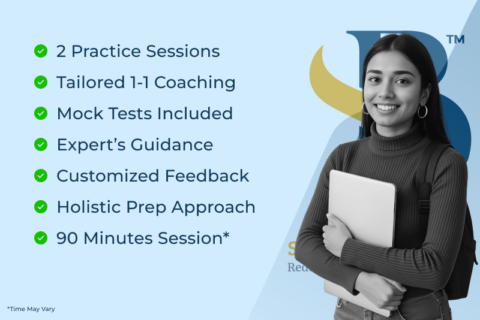
College Interview Preparation
Tailored One on One Coaching Practice Mock Interview Feedback & Guidance To …CA $450.00 – CA $750.00Price range: CA $450.00 through CA $750.00 Select options This product has multiple variants. The options may be chosen on the product page -
Simpli Admission Assist
Resume Analysis / Editing SOP Re-writing Two Supplemental Application 3 LOR Profile Based School …CA $2,000.00Original price was: CA $2,000.00.CA $1,500.00Current price is: CA $1,500.00. Add to cart
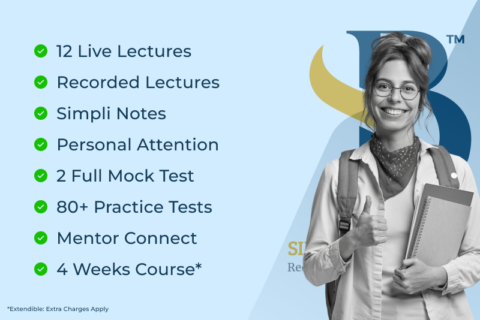
Offers on University Admission Services
-
University Admission Combo Offer (Package 2)
Instant Savings: US $ 800 What’s Included: SAA with 2 supplementals Interview Prep …CA $3,800.00Original price was: CA $3,800.00.CA $3,000.00Current price is: CA $3,000.00. Add to cart -
University Admission Combo Offer (Package 1)
Instant Savings: US $800 What’s Included: SAA with 2 supplementals Interview Prep (2 …CA $2,800.00Original price was: CA $2,800.00.CA $2,000.00Current price is: CA $2,000.00. Add to cart
Related posts
Online Course Ultimate CAAPID 2026 Timeline for International Dentists Success
Online Course Dental School Acceptance Blueprint for 4 Years of DDS Success
Online Course